Film as a digital photographer
I was born in 2000, meaning I grew up in the digital age. By the time I first picked up a camera around 2019, photography had been digital for a long time, and so from the start I’ve always shot digital cameras: DSLRs, and more recently mirrorless. I knew a bit about film photography, used mostly older lenses from the film era (both AF and manual focus), but had never actually shot a roll of film.
About two months ago, I decided to start shooting film. I’m not sure why exactly, it’s something I’d been thinking about doing for a long time, for no reason in particular and many reasons at once. Curiosity about the medium that defined photography as an art? A longing for a more physical, immutable, tangible form of photography in a landscape of unrestricted digital freedom? A reaction to the seemingly diminishing value of digital images in the age of phone cameras and endless GenAI slop? Or just because I find old film cameras cool and thought it would be fun? Probably a combination of all those things. Whatever the reason, I figured I’d finally pick up a film camera.
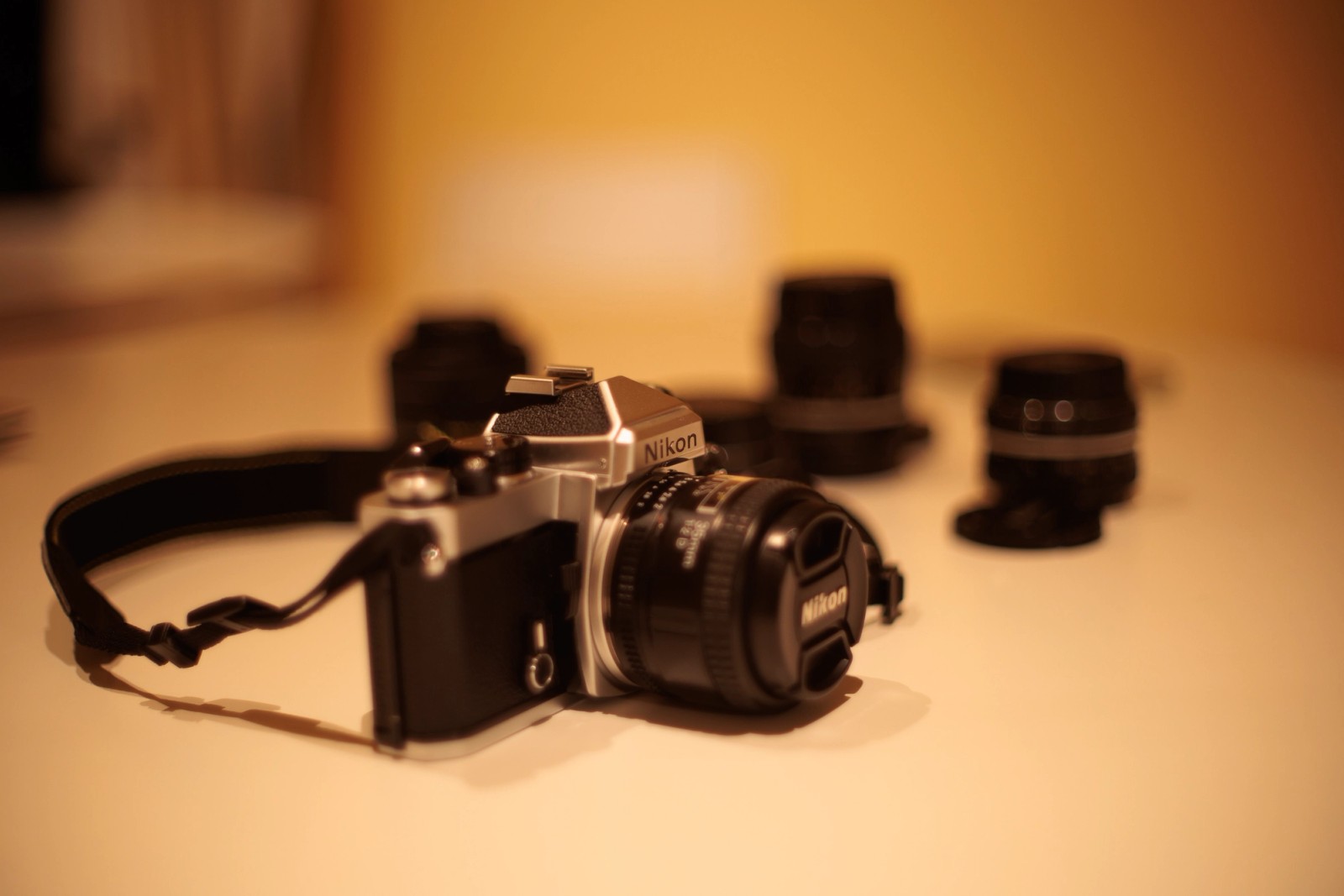
I quickly settled on 35mm as a format for the simple reasons that it’s cheaper (or, at least, less ludicrously expensive) than larger formats, the cameras are smaller, and I already had lenses for two different systems, Nikon F and Canon EF. This left only the choice of camera, and after some deliberation I decided to go for the fully manual experience and bought a used Nikon FE, a camera I’ve always loved the look of.
After shooting my first few rolls, I started to realize a few of the things that are probably obvious to every experienced photographer who got started before digital took over:
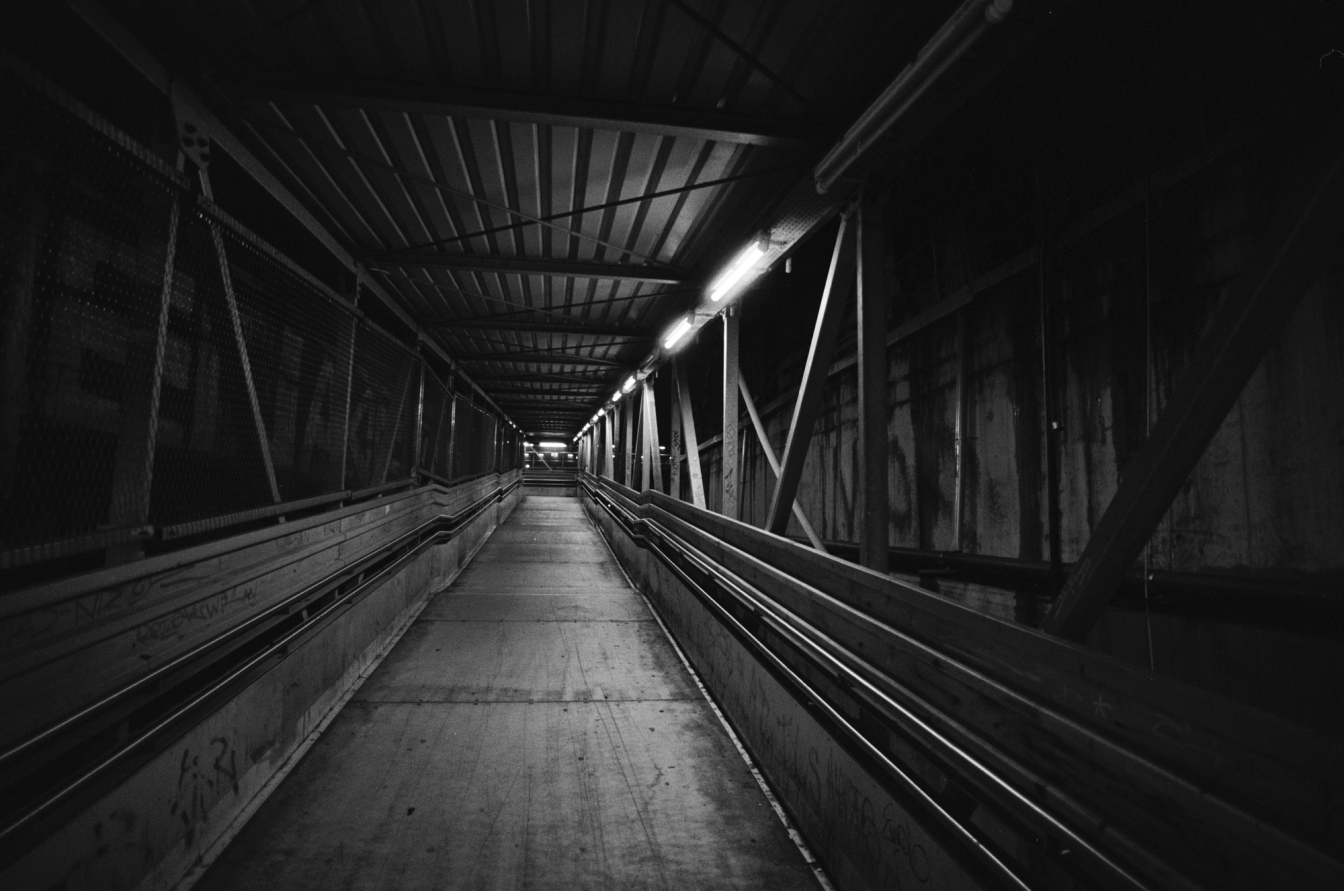
- Negative film really likes light! Many film stocks will happily take a stop or two of overexposure, and this is preferred to underexposing the shadows. This can be hard to get used to coming from digital sensors, where shadows can be trivially recovered from several stops of underexposure and highlights will quickly clip and become completely unrecoverable.
- Getting all that light in is hard, and wide apertures suddenly become a lot more valuable when you can’t arbitrarily raise ISO to ridiculous levels.
- Manual focusing people shots with any amount of movement involved at f/1.4 will give you a whole new level of appreciation for your camera’s autofocus!
And more. Learning all of this was also, of course, incredibly fun! There’s something about shooting a fully manual film camera. In some ways it’s a more involved experience than a modern digital camera, but in many others it feels far more streamlined—there’s less decisions to be made, leaving you to focus on composition, framing, and of course the subject.
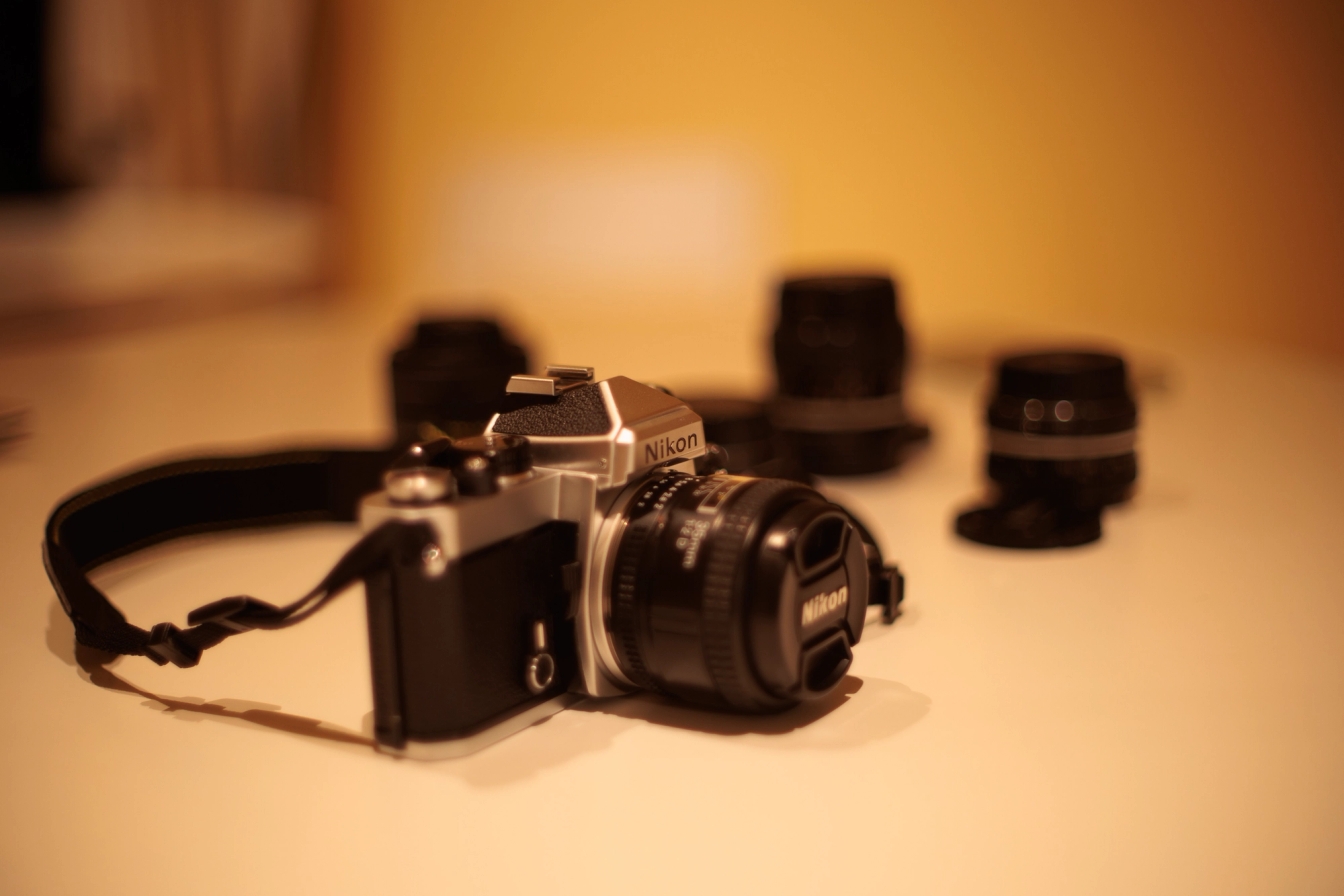
The FE is a beautiful machine, a kind of all-metal mechanical precision that’s hard to find in modern gear. Controls are wonderfully straightforward: you get an aperture ring, focus ring, a shutter speed dial, and exposure compensation. That’s it. The finder is big, bright and completely devoid of any distractions, offering a kind of direct visual connection to the subject that’s hard to replicate in modern cameras, even with an optical viewfinder. The split-image focusing screen makes manual focus easier and faster than the best focusing aids mirrorless cameras have to offer (and, of course, it’s entirely optical!). Perhaps my favorite aspect of the camera, though, is the meter.
The match-needle meter is equal parts wonderfully charming (I like it much better than the LEDs in other cameras of the time, it’s “analog cool”) and incredibly easy to use. Unlike most features of digital cameras, you don’t have to learn it because you already know what it does, it’s intuitive: green needle marks the current shutter speed, black needle marks the one the camera thinks is right. Move the shutter speed dial and the green needle moves, move the aperture ring and the black needle moves. When the two overlap, your picture is correctly exposed. I love this meter because it tells you, at a glance, everything you need to know: your current shutter speed, how far you are from the correct exposure, and whether you’re over or under; and does it all while staying out of the way as you compose your shot.
Some of these features, like the meter, are unique to the Nikon FE or shared with a few other cameras, but most of these aspects apply to any fully (or mostly, as the FE does have auto exposure) manual camera. There’s a feel to shooting with one of these, winding the film advance lever in preparation for a shot, the sound and feel of the mirror and shutter in a perfectly coordinated mechanical motion. It’s at the same time smooth and refined, and almost primitive; coming from the immense complexity of digital cameras, at times it feels like such a simple device shouldn’t even work, and I often found myself thinking “did I really just take a picture?“ right after releasing the shutter.
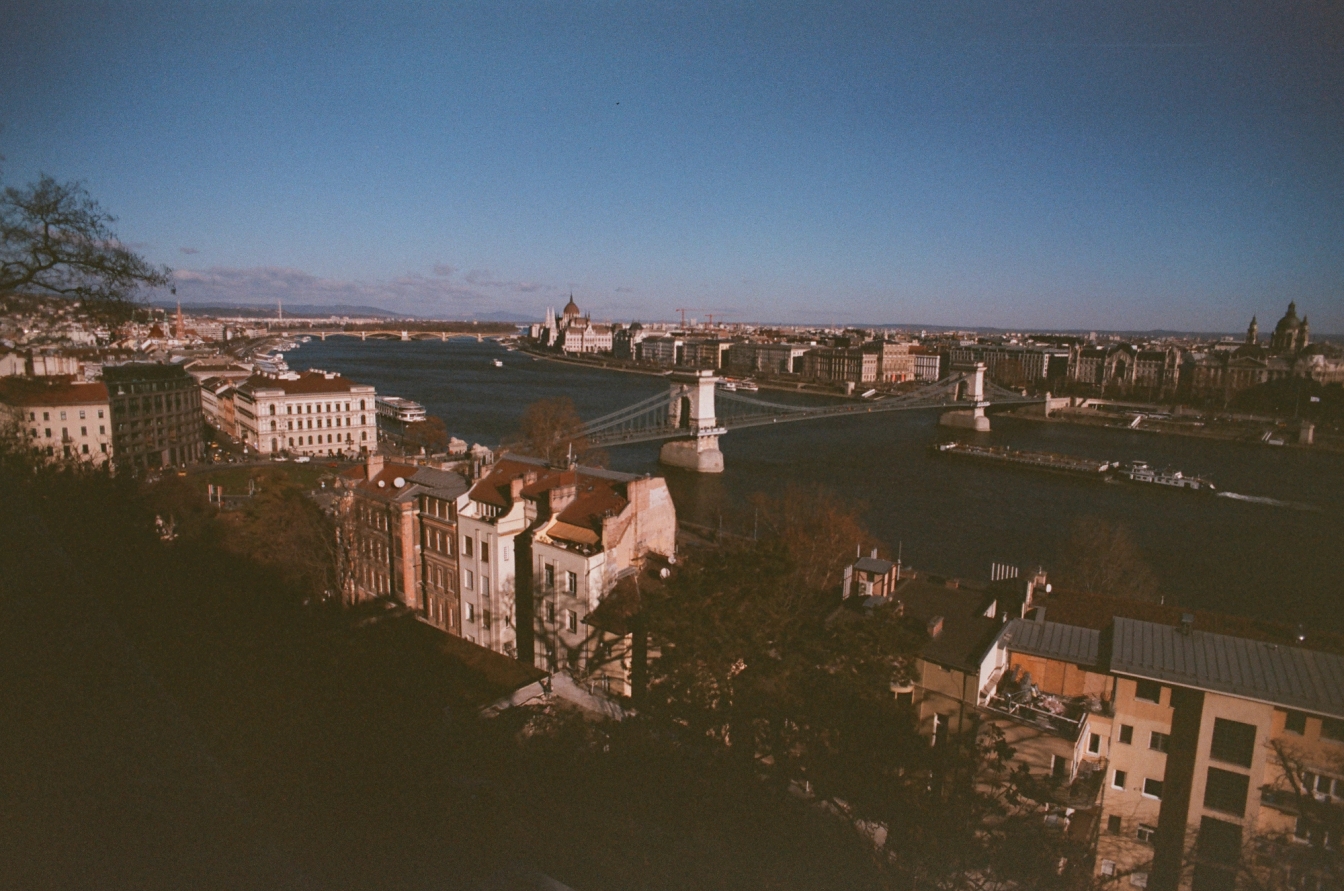
Of course, a major aspect of film photography is that it uses a finite and consumable material—film—to function. And that material is damn expensive, too. When your shots are limited, and each and every one costs you actual money, you become a lot more thoughtful about what you do or don’t shoot. This can at times feel inhibiting, but also helps create a deeper connection with your subject and surroundings. You can’t just snap away and decide in post whether the shot was worth it or not, you’ll need to figure it out now, and that’s part of the fun.
Shooting film in the digital era adds another aspect to this that I find interesting: I can much more easily stop stressing over technical perfection. If I wanted the “best” images I could get (highest resolution, perfectly focused, razor sharp with true-to-life colors) I would just shoot my R6II: even its fairly pedestrian by today’s standards 24mp sensor can far outresolve the best 35mm film, it’s way better at nailing focus than I am, and digital allows for all kinds of post-processing to achieve exactly the image you envisioned. This is not why I shoot film: I do it because it’s fun, and I get to enjoy the results of my mistakes just as well as my successes. Some of my favorite shots are underexposed, blurry, or have missed focus; in some cases I even prefer this image to a technically better one, and yet I’m almost certain given the choice, in editing, I would have picked the “correct” one. Film is teaching me to embrace these imperfections, enjoy the process, and trust myself and my gear, and that’s a valuable lesson regardless of the medium I’m shooting.
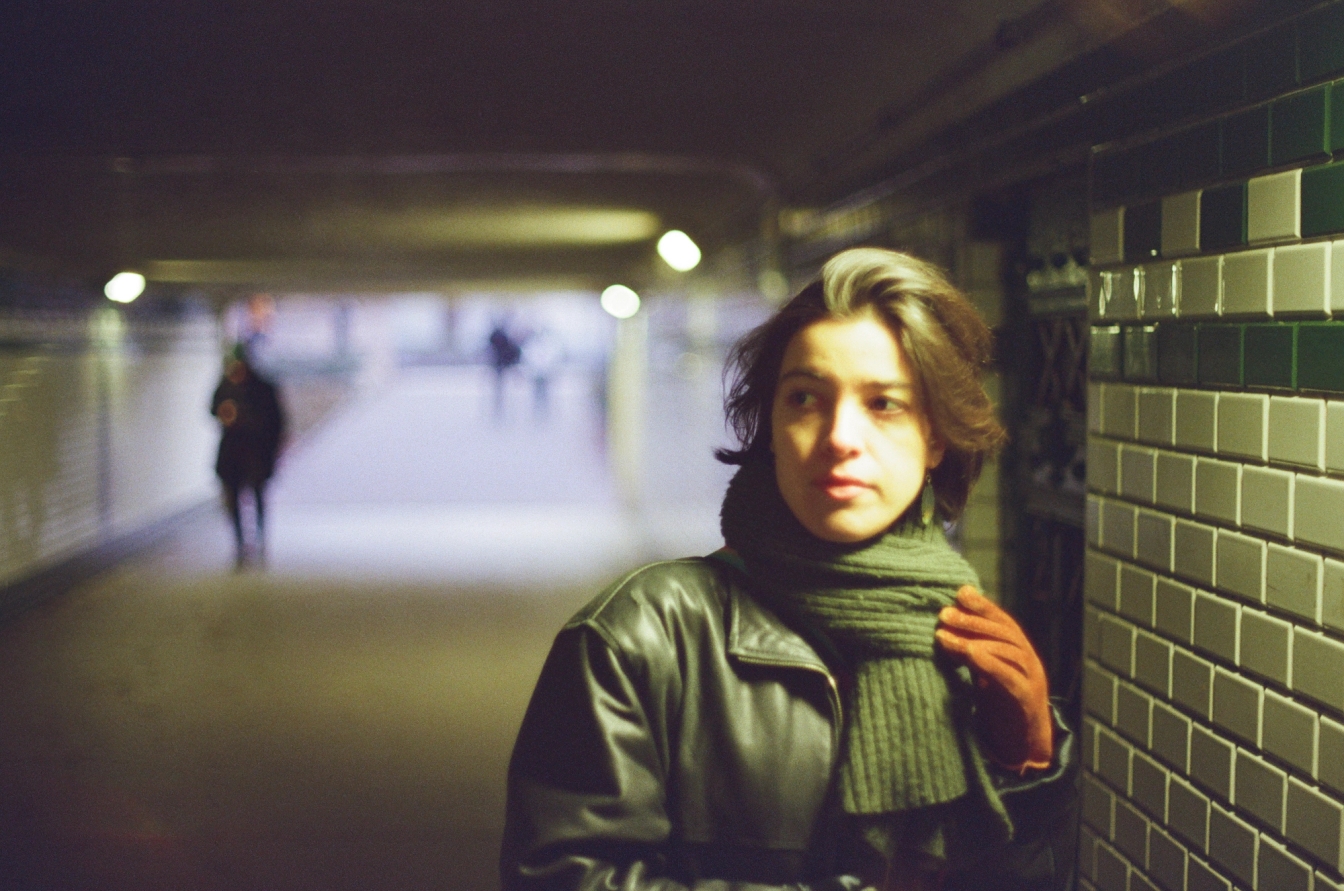
It’s well known in any creative industry that limitations breed creativity, and photography is no exception. Modern digital cameras are impressive in a myriad ways, incredibly capable and versatile, but there is much to learn and enjoy from the more limited medium of film. Most of my photography is still digital, and will most likely remain that way, but I will keep shooting film, going out with only my FE and whatever I happen to have loaded in it last, and learning from and enjoying this pure, uncluttered form of photography. And I think you should try it, too.